



Many people ask why Milwaukee—a brand with undeniable engineering strength—has never released an M18 15.0Ah battery. If this question is approached purely from a technical angle, it often leads to the wrong conclusion, because with today’s lithium-ion cell technology, a true 15.0Ah configuration is absolutely achievable. The real reason Milwaukee stops at 12.0Ah has far less to do with engineering limits and far more to do with pricing psychology, brand premium, and customer expectations.
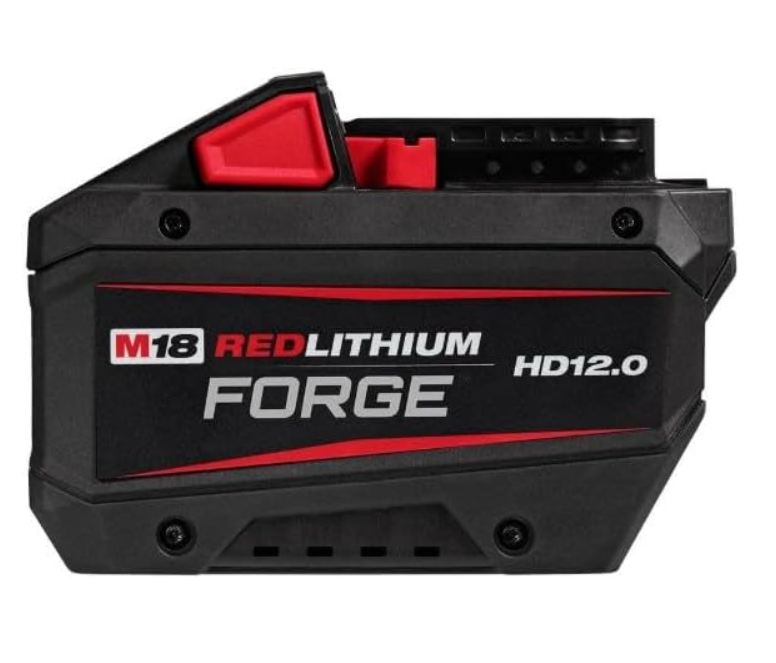
Looking at the current market makes this clear. Milwaukee’s official M18 12.0Ah battery already sits at a very high price point. In the U.S., retail pricing typically ranges from USD 200 to 250, while in Canada the same battery often sells for CAD 375 to 450. That price is not driven solely by materials or manufacturing costs; it reflects a significant brand premium, combined with distribution margins, warranty responsibility, and long-term reliability commitments. When capacity increases from 12.0Ah to 15.0Ah—roughly a 25% gain in energy—the final retail price would not rise by just 25%. Under the same brand pricing logic, a 15.0Ah Milwaukee battery would likely approach or exceed USD 400. At that level, the product enters a zone that exceeds what most professional users psychologically expect to pay for a single cordless battery.
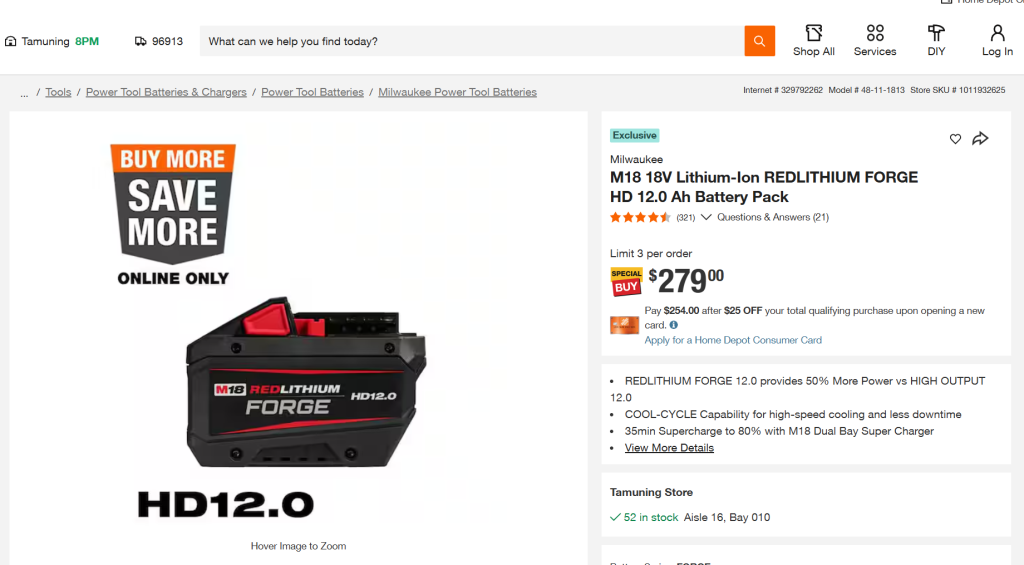
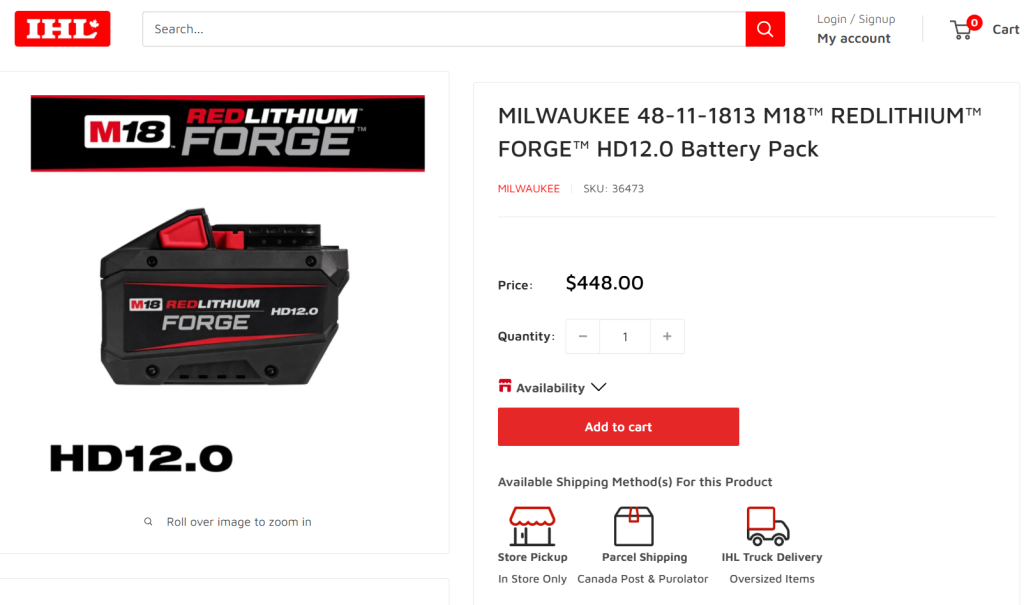
For Milwaukee, this is not simply a question of whether the product would sell. At such a high price point, user expectations escalate dramatically. Longevity, safety margins, thermal behavior under extreme loads, and after-sales responsibility all become far more demanding. Even a very low failure rate becomes a brand-level risk when incidents occur on job sites. By contrast, the existing 12.0Ah battery already covers the vast majority of high-load use cases while staying within a price range that Milwaukee can justify, support, and defend. From a business standpoint, choosing not to introduce a 15.0Ah model is a rational and conservative decision.
However, this logic applies specifically to brands with extremely high brand premiums. In the aftermarket or replacement battery segment, the situation is fundamentally different. Replacement battery manufacturers are not required to price products around symbolic brand value, nor do they need to push capacity upgrades into a “statement product” price tier. By using genuine 5000mAh-class 21700 cells—such as those from Samsung (Korea), LG (Korea), Panasonic (Japan, limited or specific models), or EVE Energy (China)—a manufacturer can achieve a true 18V 15.0Ah configuration using a standard 5S3P layout, without increasing cell count. In this case, success depends not on marketing claims, but on proper cell selection, a well-designed BMS, and current paths that are appropriate for higher total energy.
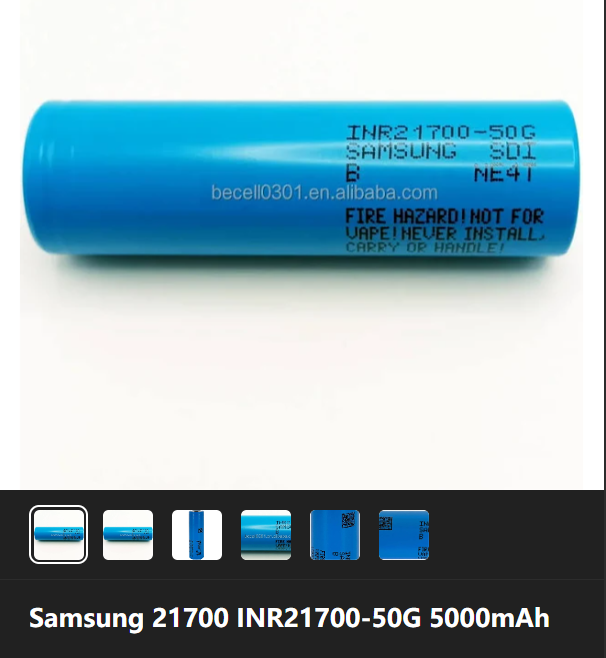
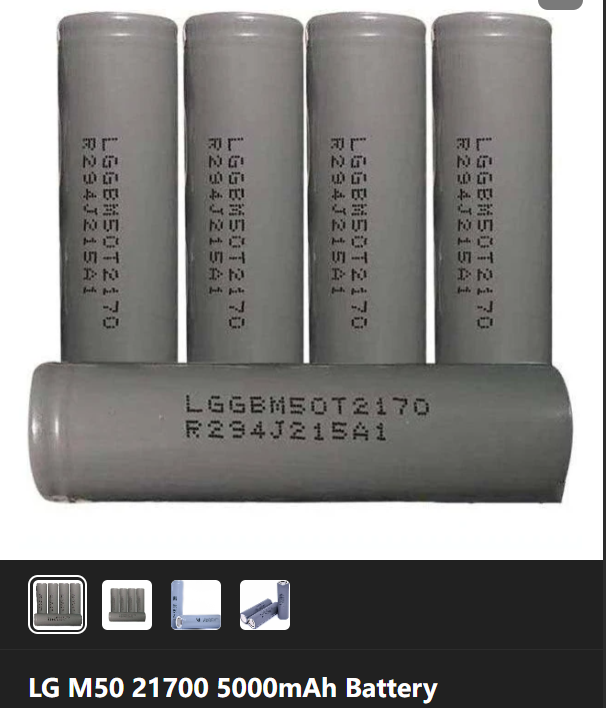
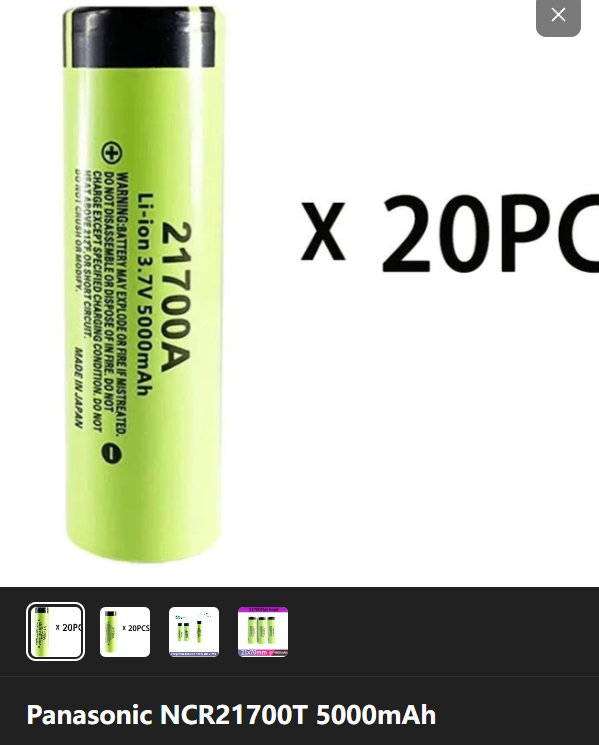
Naturally, a genuine 15.0Ah replacement battery is not cheap. Authentic 5000mAh cells carry a real cost, and tighter consistency requirements further increase manufacturing expense. But even so, its pricing is based on engineering reality plus reasonable margin—not on brand symbolism. Compared to the near-$400 price point that a major brand would be forced into, such a solution remains far more practical and approachable for many users.
In short, Milwaukee does not avoid a 15.0Ah M18 battery because it is technically unrealistic. It avoids it because, within a high-premium brand framework, that capacity would push the product into a price range that exceeds mainstream expectations. Outside that framework, where brand premium can be minimized, a properly designed 15.0Ah battery using genuine 5000mAh cells is not only feasible, but also a rational and cost-effective option.
Leave a Reply
You must be logged in to post a comment.