



In the early stages of market adoption, aftermarket batteries were widely regarded as a practical alternative to original-brand power tool batteries. They offered a lower-cost entry point while fulfilling basic usage requirements, allowing more users to access cordless tool systems without bearing the high price of original equipment. Over time, however, dissatisfaction with aftermarket batteries has grown among users. This shift in perception is not driven by isolated products or individual brands, but by structural issues that have gradually emerged across the aftermarket battery ecosystem.
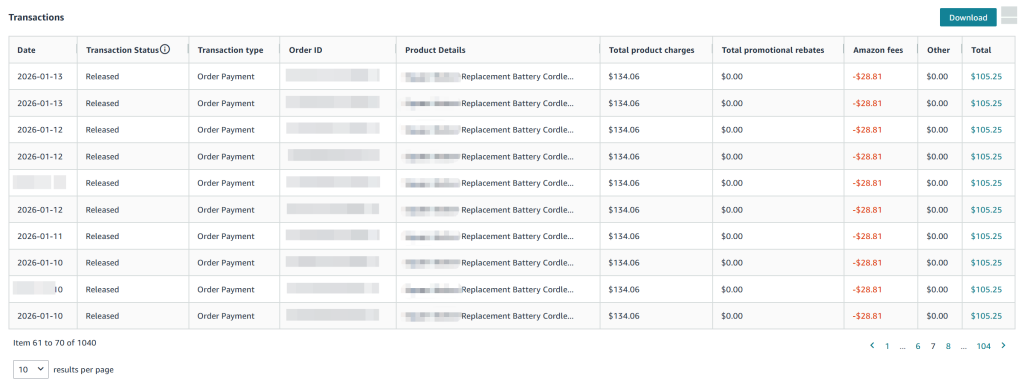
One of the most significant contributing factors is the pressure imposed by third-party sales platforms. Marketplaces such as Amazon operate under cost structures that place substantial financial strain on sellers through high commission rates, fulfillment fees, and increasingly competitive advertising bidding systems. When these expenses are combined, platform-related costs can approach or exceed 30% of the retail price. Under such conditions, sellers face limited flexibility to invest in higher-grade cells, robust mechanical design, conservative BMS architecture, or consistent quality control processes. Cost ultimately defines the boundaries of product quality. If an aftermarket battery is priced too close to an original-brand battery, its value proposition as a replacement becomes difficult to justify in the eyes of consumers; yet maintaining a meaningful price gap often requires compromises that directly affect product reliability.
At the same time, the battery category presents unique challenges within standard return systems. Unlike many consumer goods, batteries lack an immediately verifiable post-use condition. Third-party platforms typically do not test returned batteries, nor do they assess whether a battery has experienced excessive discharge, sustained high-load stress, or internal component replacement. Most returns are processed as customer dissatisfaction cases without technical inspection. This creates a disproportionate risk environment for sellers. As prices rise, return rates often increase sharply, driven in part by consumer skepticism toward replacement products and reinforced by the market’s long history of inconsistent quality. The prevalence of substandard aftermarket batteries has shaped buyer expectations, making returns more likely even when a product functions within specification.
Long-term price competition has further distorted consumer perception. Prolonged exposure to extremely low pricing has conditioned some buyers to view those prices as the “true” market value of a battery. Once this perception is established, manufacturers attempting to deliver higher-quality aftermarket batteries at more realistic prices face immediate resistance. Higher pricing is no longer interpreted as an indicator of improved engineering or reliability, but instead as an unjustified premium. In many cases, this perception leads to elevated return rates, as buyers question why one replacement battery costs more than another, despite differences in materials, design, or testing standards. As a result, price ceases to function as a meaningful signal of quality and instead becomes a constraint that penalizes responsible manufacturing.


These dynamics did not emerge overnight, nor are they the result of a single cause. In principle, the aftermarket battery sector could have established a baseline consensus around accurate capacity labeling, consistent cell sourcing, conservative protection design, and adherence to fundamental safety standards. In practice, competitive pressures have often favored cost reduction and short-term margin optimization over long-term credibility. As these decisions repeated across the market, a feedback loop formed: declining quality eroded trust, diminished trust increased return rates, rising return risk incentivized further cost cutting, and low standards gradually became normalized.
Within this environment, growing dissatisfaction with aftermarket batteries reflects broader systemic issues rather than the failure of the replacement concept itself. The erosion of trust is the result of prolonged structural imbalance between platform economics, consumer behavior, and industry practices. Until these forces are better aligned, the aftermarket battery market will continue to struggle with credibility, and both manufacturers committed to quality and users seeking reliable alternatives will remain subject to the consequences of this cycle.
Leave a Reply
You must be logged in to post a comment.